

Professional companioning for school leaders is essential in today’s educational landscape. As principals face increasing pressures—from heightened parental expectations to preserving the core educational narrative—this supportive approach offers a pathway to resilience and purpose-driven leadership
It’s death by a thousand cuts—each day, the demands pile up higher and higher until you start questioning whether you can keep going’ (Wade, 2025, p. 15).
If you feel this way, as a school leader you are not alone. This statement reflects the lived reality of school principals, and those in executive leadership positions across Australia—professionals managing not only the operational demands of schools but also the deep emotional load and relational pressures of their roles. The recently released 2024 Australian Principal Occupational Health, Safety and Wellbeing Survey (Kidson,2025) reveals the severity of these challenges, with over 49% of principals experiencing physical violence last year and more than half facing threats of violence. Leaders are increasingly contending with heightened parental expectations and scrutiny, leaving them feeling overwhelmed and unsupported.
And yet, amid these challenges lies a paradox. Leaders often describe their work as deeply rewarding, finding satisfaction in shaping school cultures and changing lives. The question then arises: What is it about the current environment that makes it so difficult to sustain this sense of purpose and joy? One major source of strain stems from the increasing expectations placed on school leaders, particularly by parents.
Navigating Parental Expectations and the Educational Mission
Wade’s (2025) research vividly captures the moral injury that occurs when parents approach schools as service providers, expecting personalised solutions and immediate responsiveness. One principal reflected, “Every decision I make is questioned, every action scrutinised. It feels like I’m constantly under siege” (Wade, 2025, p. 16).
This dynamic highlights the growing disconnect between external pressures and what principals value most : educative purpose . Biesta (2015) describes this as a struggle to preserve the “educational narrative”—a vision of schooling rooted in critical thinking, ethical citizenship, and human flourishing. The 2024 Australian Principal Occupational Health, Safety and Wellbeing Survey reinforces this tension, showing how workload pressures, relational conflicts, and the emotional weight of parent interactions are eroding leaders’ capacity to lead with – and on – purpose.
This is where professional companioning plays a critical role. In light of the starkly clear research results from the 2024 survey, Kidson (2025) notes in The Conversation that ‘reflective supervision’ is a highly recommended strategy, providing school leaders with a vital opportunity to process their experiences and align their actions with the school’s mission in a safe, supportive space. Degenhardt’s (2013) professional companioning model builds on this principle, offering mentorship, critical friendship, strategic co-planning, ultimate purpose partnership, consultant, and coach to empower leaders as they navigate these pressures. Together, these reflective practices enable school leaders to reclaim the educational narrative – remaining response-able in the face of mounting challenges.
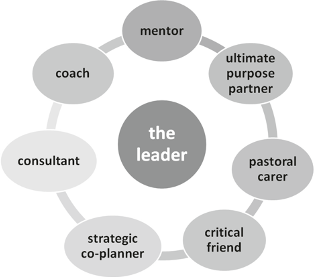
Figure 1 Dimensions of professional companioning (Degenhardt, 2013, p.21)
Integrating Professional and Personal Lives
Reconnecting with purpose requires more than operational adjustments and offers to reduce paperwork —it calls for intentional and sustained support. ‘Professional companioning’ (Degenhardt, 2013) provides leaders with the space to critically reflect on ‘wicked problems’ (Rittel & Webber, 1973), develop strategies for managing expectations, and realign their work with their values and higher purpose. It is about integrating personal and professional lives.
This reflective process empowers leaders to confront the paradox of their roles—not as an obstacle, but as an opportunity for growth. Professional companioning equips them to navigate the demands of their work while sustaining passion and purpose.
Building Resilient Leadership Cultures
Leadership does not exist in isolation. It is shaped not only by school communities but also by broader forces such as policy, societal expectations, and systemic structures. Wilkinson (2023) emphasises how the growing volatility of educational environments places significant emotional and relational demands on leaders. These external forces compound the pressures principals face in fostering trust, collaboration, and shared purpose within their schools.
Professional companioning offers the foundation leaders need to build resilience and align their leadership with what they value most. By reclaiming the “educational narrative” leaders can navigate these pressures with clarity and purpose. Response-able leaders have what they need to creatively respond to wicked problems, creating collaborative school cultures based on trust, purpose, and the ethic of care. It is where students and staff alike can thrive. Where educational leaders find a voice to shape education policy itself.
In an era of escalating pressures on educational leadership, systemic and holistic support is no longer optional—it is essential. If you feel the weight of your leadership role, integrated leadership support through professional companioning may be the cut-through to the other side you need.
Questions for Reflection
As a leader, take a moment to consider:
– Have I lost sight of the deeper purpose that drew me to educational leadership in the first place?
– What strategies or support systems do I currently have in place to safeguard my well-being and effectiveness?
– How might integrating my professional and personal lives help me navigate the emotional and relational challenges of leadership?
– What steps can I take to reclaim the educational narrative and align my leadership with my passion for educational purposes
Let us know your questions and comments! If you would like to have a conversation about you can flourish as a leader, email us at team@consciouseducation.com.au.
References
Biesta, G. (2015). The Beautiful Risk of Education. Routledge.
Degenhardt, L. (2013). Professional companioning: Support for leaders in managing the increasing complexity of their roles. Leading and managing, 19(2), 15-33.
Kidson, P. (2025, March 31). ‘It is a seriously difficult role and only getting harder’: School principals speak about stress, violence and abuse in their jobs. The Conversation. https://theconversation.com
Rittel, H. W. J., & Webber, M. M. (1973). Dilemmas in a general theory of planning. Policy Sciences, 4(2), 155–169. https://doi.org/10.1007/BF01405730
Wade, C. (2025). ‘Death by a thousand cuts’: Understanding the experience of school leaders navigating parent engagement. The Australian Educational Researcher, 1-24.
Wilkinson, J. (2023). Principals’ emotional labour in volatile times. Education into the 2030s: The big education challenges of our times. Monash University.